The best way to explain my feelings about alpha protocol is to compare two aspects that make a fine balance in any game: quality and quantity.
Competition (MGS for example) limits its variety of gameplay to focus on making each aspect of a high quality, and this works. Alpha protocol tries to throw everything at you, and it suffers because of it.
The game starts in modern-political style with a commercial airline destroyed by missile. You’re put in the shoes of Michael Thornton, a US secret agent who’s sent out to Saudi Arabia to track down the terrorists responsible for said attack. Of course nothing is as it seems, and as you manipulate the story through different decisions and conversation strings, an ending is determined.
The story is definitely the strength of the recipe. It gives you the rare feeling of control over your character’s destiny that many games have attempted to do; yet failed. In every plot situation, you get the choice between four character interactions mid-conversation, a la Mass Effect. It’s not terribly complex on the face of it; but the huge amount of these sections, and each individual response being strikingly different does stand out as a great aspect to the game.

This is, unfortunately, where the game makes things really hard for you to like. The graphics flake in and disappear. Textures are poorly rendered, character movement is mechanical, and the framerate is reduced to a mere crawl at the sight of the slightest bit of detail or action in a scene. Voice acting varies from some impressive scenes (especially for sega) and some more questionable performances. So a general marmite affair of presentation, that just doesn’t feel completed to the extent that it should.
The gameplay is where the recipe starts to taste a little sour. A dodgy cover system and shooting mechanic make not getting shot much more of a slog than is necessary. The RPG aspects begin to shine through for the enthusiast: deep weapon customisation and stats based combat works for the niche market it is going for. Besides that, it’s all downhill from there. A stealth game, which has a poor sneaking mechanic, a fiddly cover system and character movement.
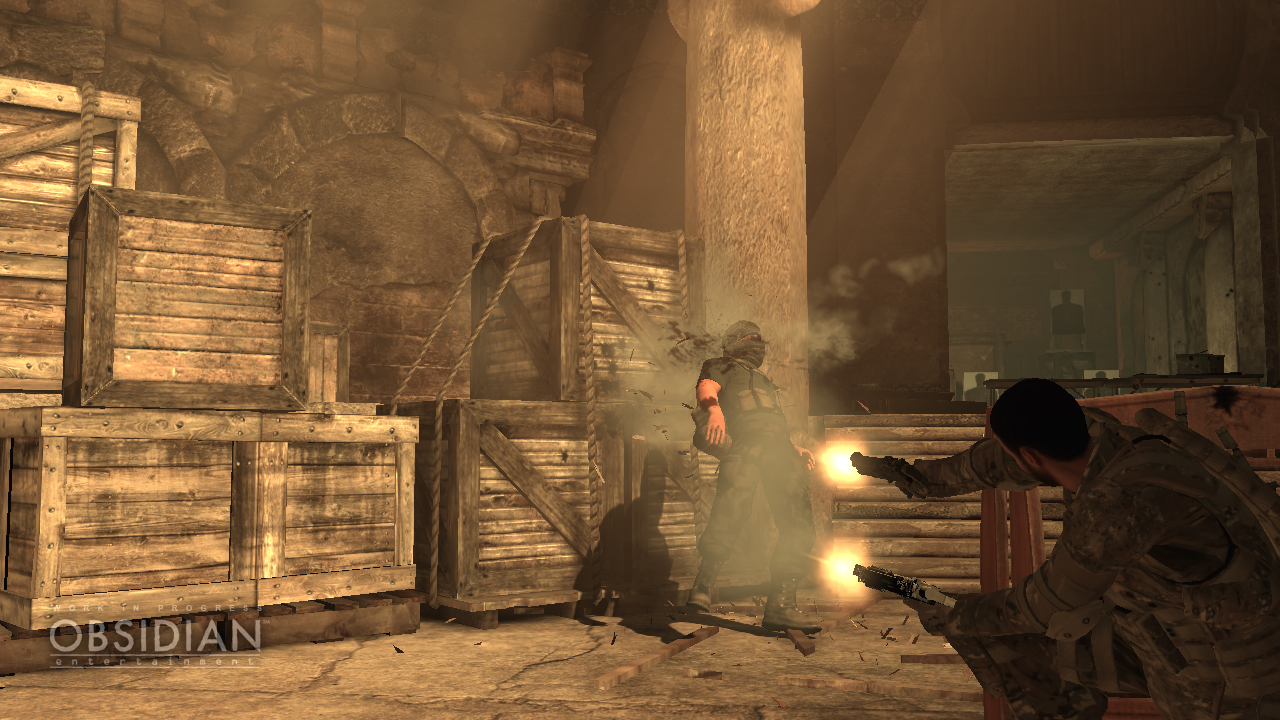
Fingers crossed it’s fixed for people in an update; but of course we’re here to talk about the initial product. Alpha Protocol is a game that can only be admired in the context of what it tries to do. It attempts a fully interchangeable story line, RPG aspects sitting alongside a stealth combat mechanic. It tries to hit too many notes, and fails at all of them by forgetting the key fundamental of a game; making it work properly. It’s half done, an example of company deadlines killing a game before it’s even released.


0 comments:
Post a Comment